
Digital Terrain Model: Concepts, Accuracy & GIS Uses

Updated: Aug 26
As a basic element of a modern Geographic Information System (GIS), a Digital Terrain Model (DTM) is an important visualisation of the surface of the Earth without the vegetation or structure of the natural environment. DTMs enable the analysis of terrain, hydrological models, and help planners determine where to construct infrastructure and how to manage the environment. This article will outline what DTMs are, how they are classified, the accuracy and reliability of their data, and their uses in the GIS world. Understanding how to effectively apply the DTM concept to your own spatial analysis(s) will be key to understanding the way the GIS community uses DTMs.
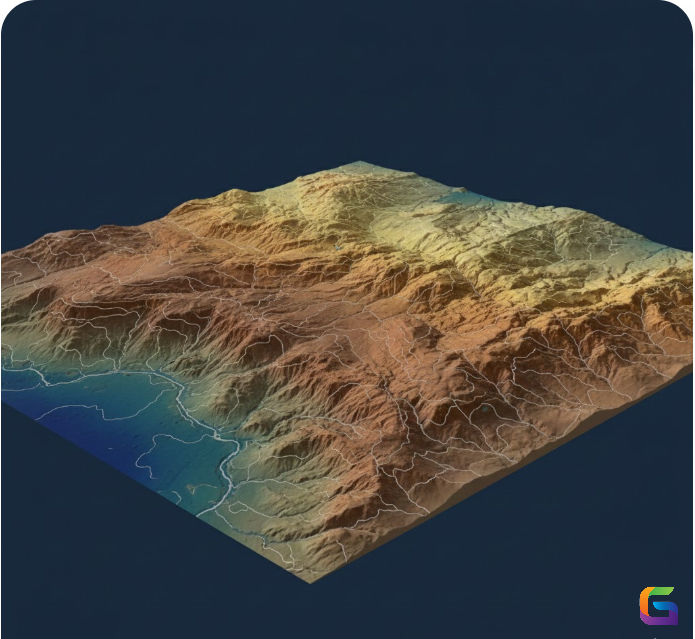
What is Digital Terrain Modelling (DTM)?
Digital Terrain Models are generally defined as “bare-earth model(s),” i.e., representations (s) of the earth's surface without above-ground manmade or natural features (buildings, vegetation, bridges, etc.). Specifically, Digital Terrain Models represent the surface morphology of the terrain itself and not the elevation of the terrain (elevation being the geometric height value). Hence, Digital Terrain Models are primarily for engineers and analysts.
Digital Terrain Models can be produced with:
Light Detection and Ranging (LiDAR) technology
Photogrammetry using air photos,
Ground survey data collection, and
Radar-based elevation collection techniques.
Digital Terrain Models will typically be saved and maintained on GIS in raster grid format, Triangulated Irregular Network (TIN) format, or Point Cloud format, depending on their relative detail and use.
DTM vs DEM vs DSM: Key Differences
Understanding the differences between elevation models is essential in GIS workflows:
Model | Description |
DEM (Digital Elevation Model) | General elevation model; may include natural and man-made features. |
DTM (Digital Terrain Model) | Bare-earth model with terrain features like ridges and breaklines |
DSM (Digital Surface Model) | Includes buildings, vegetation, and other surface objects |
DTMs provide higher analytical accuracy for terrain-based studies compared to DEMs and DSMs.
Considerations for DTM Accuracy
The accuracy of Digital Terrain Models is one of the most important characteristics of a DTM for engineering and also for environmental applications.
Factors to Consider
Spatial Resolution
Spatial resolution means the cell size, or the density of the points (the more points per square meter, the higher the resolution of the DTM).
The higher the spatial resolution, the greater the detail about the terrain that will be depicted.
Common resolutions of Digital Terrain Models range from 0.5 m to 30 m.
Vertical Accuracy
Vertical accuracy refers to the extent to which the elevation values derived from the DTM match actual elevations.
Vertical accuracy is expressed as Root Mean Square Error (RMSE).
LiDAR-derived DTMs often have vertical accuracies below 1 m.
Data Source Quality
LiDAR provides better quality data than photogrammetry.
Survey-grade GPS increases the vertical accuracy of the DTM.
Terrain Complexity
Complex terrains such as steep slopes, dense forests, and built-up urban areas will typically have a lower accuracy than simpler terrains.
Breaklines will improve the accuracy of developed DTMs over complex terrains.
Processing Techniques
Ground point classification
Noise filtering
Statistical methods of interpolation (such as Inverse Distance Weighting, Kriging, and Spline).
Common DTM Generation Methods in GIS
DTMs are created using various geospatial techniques:
LiDAR Ground Filtering Algorithms
Stereo Photogrammetry
Interpolation from Survey Points
Contour-to-Surface Conversion
Popular GIS software such as ArcGIS Pro, QGIS, and GRASS GIS provide advanced tools for DTM generation and validation.
Applications of Digital Terrain Models in GIS
Hydrological and Watershed Analysis
DTMs are widely used for:
Flow direction and accumulation modeling
Flood risk mapping
Drainage network extraction
Civil Engineering and Infrastructure Planning
Road and railway alignment
Cut-and-fill volume calculations
Slope stability analysis
Environmental and Climate Studies
Soil erosion modeling
Landslide susceptibility mapping
Habitat suitability analysis
Urban and Regional Planning
Terrain suitability assessment
Visibility and line-of-sight analysis
Disaster mitigation planning
Defense and Telecommunications
Radio signal propagation
Terrain masking analysis
Strategic planning
Advantages of Using DTMs in GIS
DTMs provide an Accurate Representation of Terrain.
DTMs produce more Accurate Analytical Results.
DTM's Allow for Advanced Types of Spatial Analysis
DTMs Are Critical to Engineering Products
Challenges and Limitations of DTMs
In addition to the advantages of DTMs, there are some Disadvantages and Limitations associated with DTMs, including:
High Cost of Data Acquisition (LiDAR in particular)
Large Size and Processing Requirements of DTM Data
The Accuracy of a DTM Depends on Both the Quality of the DTM Data and the Nature of the Terrain
Best Practices for Using DTMs in GIS
Use a Resolution Appropriate to the Intended Use of the DTM
Validate the DTM's Accuracy by Using Ground Control Points
Apply Filtering Methods That are Appropriate for the Terrain
Incorporate Breaklines If the DTM is Being Used for Hydrological and/or Engineering Projects
Digital Terrain Models (DTMs) Are an Important Data Source in GIS. The Accurate Representation of the Earth's Bare Surface is Critical in Making Informed Decisions Regarding Terrain Analysis, Infrastructure Development, and Environmental Modeling. As Remote Sensing and LiDAR Technologies Continue to Advance, DTMs Will Remain Central to Future Geospatial Analysis.
For more information or any questions regarding the Digital Terrain Model (DTM), please don't hesitate to contact us at
Email: info@geowgs84.com
USA (HQ): (720) 702–4849
India: 98260-76466 - Pradeep Shrivastava
Canada: (519) 590 9999
Mexico: 55 5941 3755
UK & Spain: +44 12358 56710


Comments